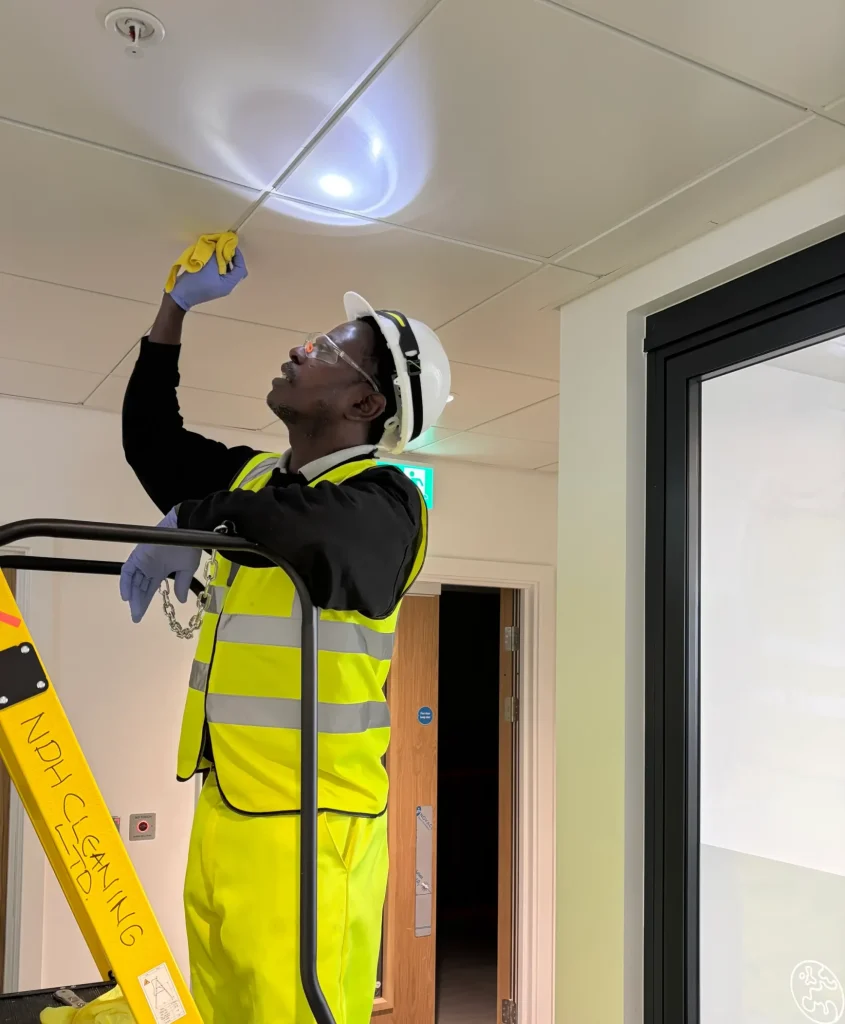
Keeping construction welfare facilities clean
Keeping construction welfare facilities clean, stocked and compliant, every working day, on live sites across the country.
Welfare is the part of a construction site that everybody on site uses, and so is an important aspect of the project. It is also the part that gets noticed first. A client walking the site, a visiting director, an HSE inspector or a safety adviser will form a view of how a job is being run within about ninety seconds of stepping into the canteen, and that view is difficult to shift afterwards. Site management knows this. What it rarely has is the time, the labour or the inclination to do anything about it.
NDH Cleaning Ltd exists to take that problem off your desk. We provide daily welfare cleaning to principal contractors on live construction sites, using directly employed, CSCS carded operatives who are inducted onto your site and work to a written specification agreed with your team before we start. We have been doing it since 2015, we hold Constructionline Gold, SSIP and BICSc accreditation, and we currently deliver welfare cleaning and builders cleaning for Acciona Industrial UK Ltd at their West Bromwich site.
What welfare cleaning involves
Welfare cleaning is not office cleaning carried out on a building site. The environment is different, the soiling is different, the hours are different and the standard of resilience required from the people doing it is different. A canteen that seats a hundred and fifty operatives across two sittings takes more punishment in one day than a small office takes in a fortnight.
Drying rooms quickly accumulate wet workwear, while toilets and washrooms experience concentrated periods of use around breaks rather than consistent use throughout the day. Mud and dust are carried in continuously from the works, and no number of matting stops all of it.
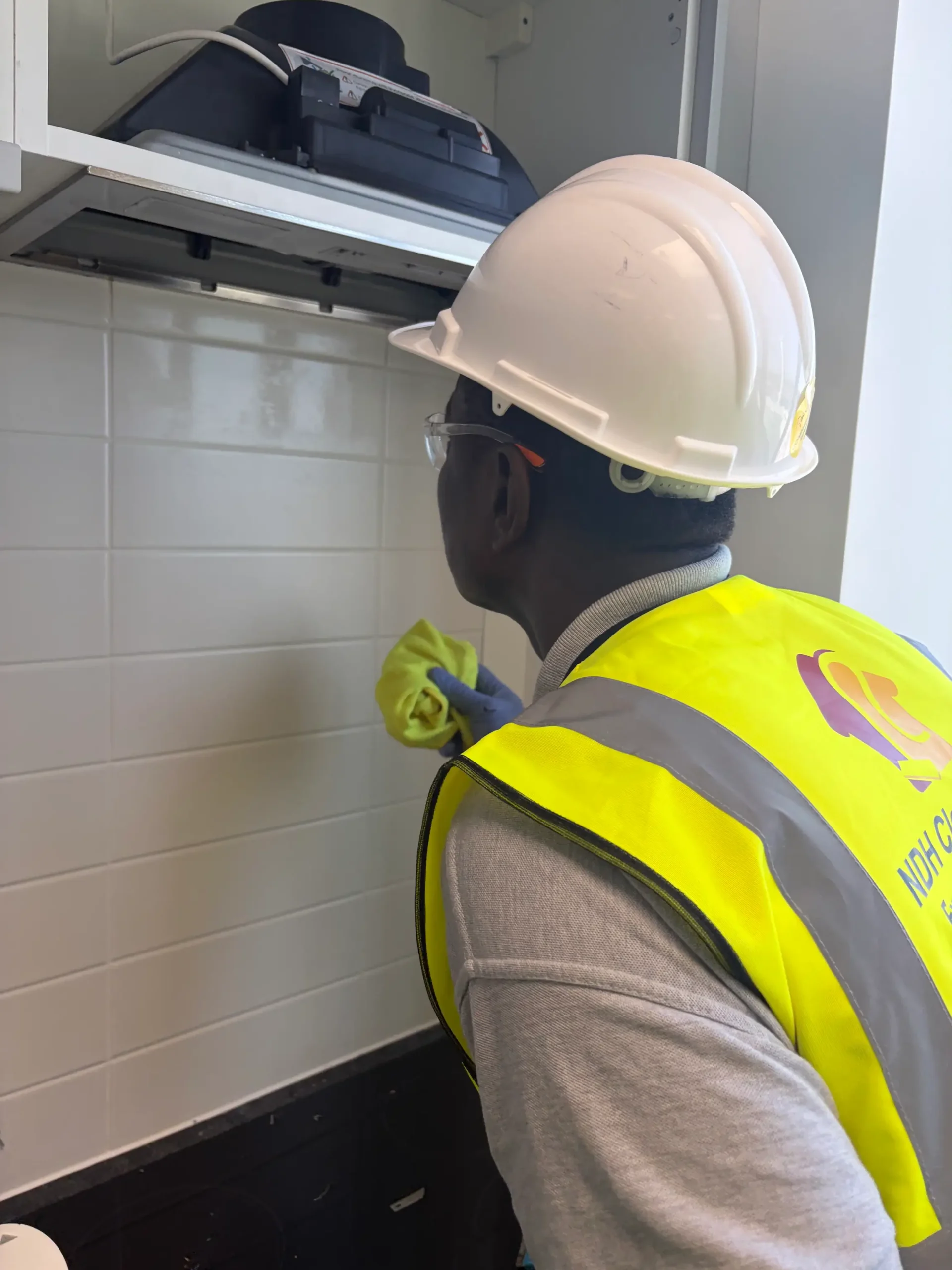
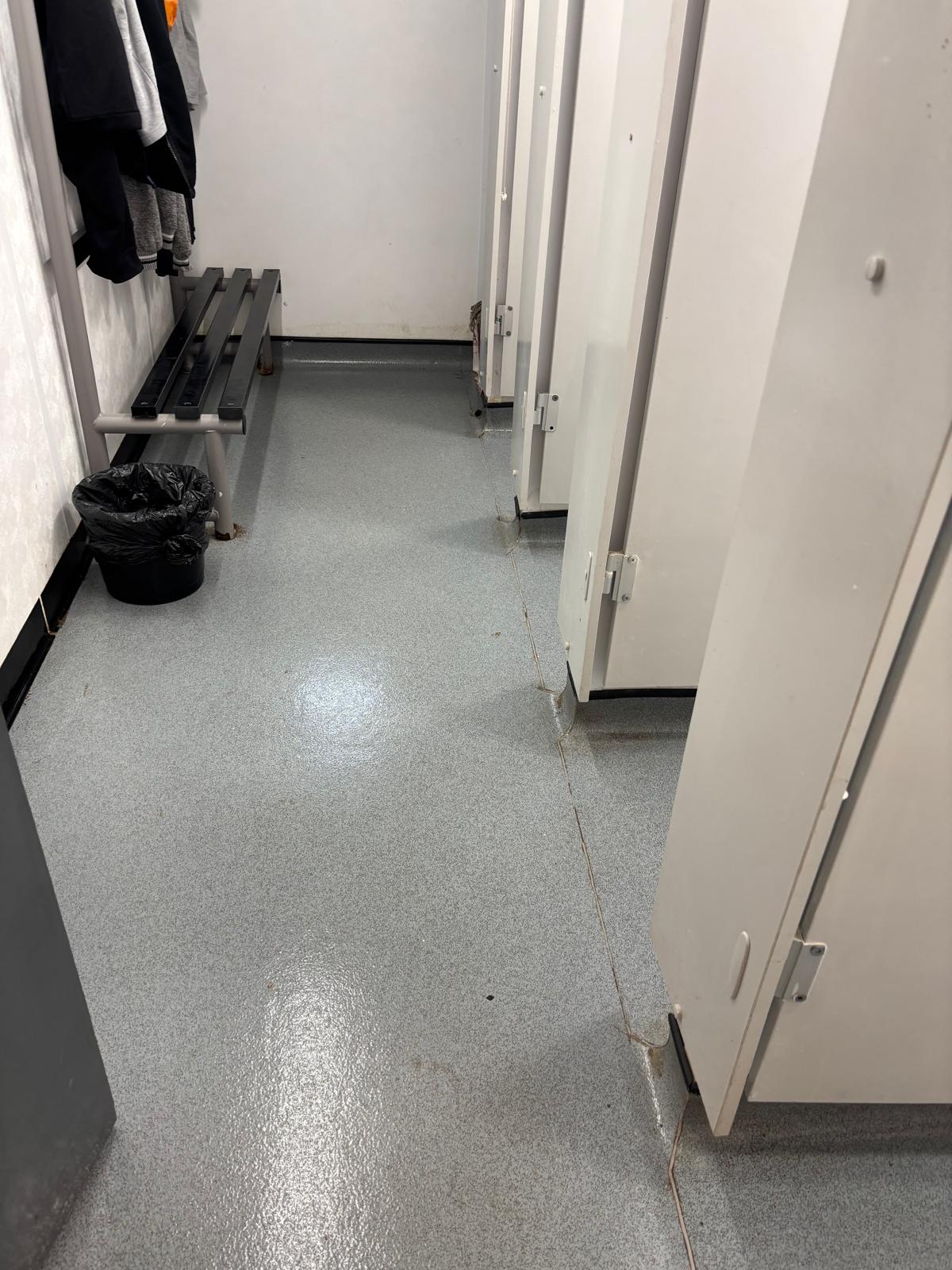
Our daily service covers the whole welfare footprint. In canteens and mess areas that means tables, seating, serveries and counters cleaned and sanitised, microwaves, fridges, water boilers and vending units cleaned inside and out, floors swept and mopped, and waste removed with bins relined. In toilets and washrooms, it means full sanitation of WCs, urinals, cubicles, basins, taps and hand dryers, mirrors and dispensers cleaned, floors mopped at the correct dilution, and consumables restocked so they do not run out halfway through a shift. In drying rooms and changing areas it means lockers, benches, floors and ventilation grilles kept clean and clear, so the space does the job it was installed to do rather than holding damp. Site offices and meeting rooms are cleaned to the same standard as any commercial office, because that is where your client sits down. Corridors, stairs and entrance matting are covered too, since they are where most of the dirt arrives.
Working inside a live site
Everything we do is timed around your operation rather than ours. On most sites that means an early start before the workforce arrives, with a second pass through the canteen and washrooms in the middle of the day where headcount justifies it. On sites running extended hours or shift patterns we adjust to suit. The point is that cleaning should be invisible: nobody should be mopping a canteen floor while fifty people are trying to eat in it.
Our operatives are CSCS carded and inducted like any other trade on your site. They work to risk assessments and method statements written for that specific site, and we supply our own materials, equipment and COSHH documentation. Because our people are directly employed rather than supplied through an agency, the same faces come back week after week. They learn the site, they know which unit gets hammered and which one barely gets used, and they can be trusted to work unsupervised in areas where you would not want a stranger wandering about.
The compliance picture
Schedule 2 of the Construction (Design and Management) Regulations 2015 requires the principal contractor to provide suitable and sufficient sanitary conveniences, washing facilities, drinking water, changing rooms, lockers and rest facilities, and to keep them in a clean and orderly condition. The wording matters. The duty is not discharged by installing a welfare unit at the start of a project. It runs for the whole life of the job, and cleaning is how it is met in practice.
We are not a compliance consultancy, and we do not pretend to be. What we do is provide the evidence that the duty is being met: an agreed specification, a documented frequency, records of attendance drawn from your own site access control, and a supervisor who raises problems rather than working around them. If a facility is failing, if a unit is being misused, or if the agreed frequency is no longer enough for the headcount on site, you will hear about it from us before you hear about it from anybody else.
Frequency
Most construction welfare facilities need cleaning at least once every working day. Sites with a high headcount, or a single welfare block serving several work fronts, generally need a twice daily service. Deep cleans are usually best scheduled at the end of each project phase, and after any spike in occupancy. We will recommend a frequency based on your headcount and shift pattern, and we will tell you if we think you are buying more than you need.
Consumables, without the fire drill
Running out of hand soap on a Friday afternoon is a small problem that becomes a large one quickly. We monitor and replenish soap, paper, sanitiser and bin liners as part of the service, and we report on consumption so that stock becomes a predictable line item rather than a recurring emergency. Where a client prefers to hold their own stock, we will work to that, but most site teams would rather it simply stopped being their problem.
Scaling with the programme
Site headcount does not stay still, and welfare demand moves with it. We plan resource around your programme, increase frequency or hours through peak periods, and scale back when numbers reduce. Changes are discussed and agreed rather than appearing unannounced on an invoice. If your numbers are coming down, we would far rather have that conversation early than discover it at the end of a month, and we say so because it is how we would want to be treated ourselves.
Hours you can check
Our operatives sign in and out through your site access control, which gives you an independent record of the hours we have delivered. At the end of each month we collate that record, split it by category where a site runs both welfare and builders cleaning, and present it for approval before we invoice. What you approve is what was worked. Nobody should have to take a cleaning contractor’s word for it, and with us you do not have to.
Frequently Asked Questions about Site Welfare Cleaning
What is site welfare cleaning?
Daily cleaning of the facilities your workforce uses on a live site: canteens, toilets and washrooms, drying rooms, changing areas and site offices. Heavier soiling than office work and timed around shift patterns.
Is welfare cleaning a legal requirement?
The duty behind it is. Schedule 2 of the CDM Regulations 2015 requires the principal contractor to keep welfare facilities in a clean and orderly condition for the whole project. Cleaning is how that gets met.
How often do welfare facilities need cleaning?
At least once every working day on most sites. Where headcount is high, twice daily works better: an early clean, then a pass through the canteen and washrooms mid shift. We can also have a twenty-four-hour presence if needed. We will advise on your numbers.
Do you clean welfare cabins and portable toilets?
Yes. Cabins, canteen units, drying rooms, changing units, site offices and portable toilet blocks are all part of a normal welfare specification.
Are your operatives CSCS carded and site inducted?
Yes. Every operative is CSCS carded and goes through your induction, working to risk assessments and method statements written for your site. The same inducted faces come back each week.
Do you supply your own equipment and materials?
Yes, including COSHH documentation. All we need from you is access, somewhere secure to store equipment, and water and power where the site has them.
Can you supply the consumables as well?
Yes, and most clients ask us to. Soap, paper, sanitiser and bin liners are monitored, replenished and reported on, so stock stops being a Friday afternoon emergency.
Do we know what hours you have worked?
Our operatives sign in and out through your own site access control. We collate that record monthly and send it for approval before invoicing. What you approve is what was worked.
Can the service go up and down as the site changes?
Yes. Welfare demand follows headcount, so the service should too. Changes are agreed rather than appearing on an invoice, and we would far rather hear early if your numbers were coming down.